Dinner · Caribbean
Barbados Pepperpot

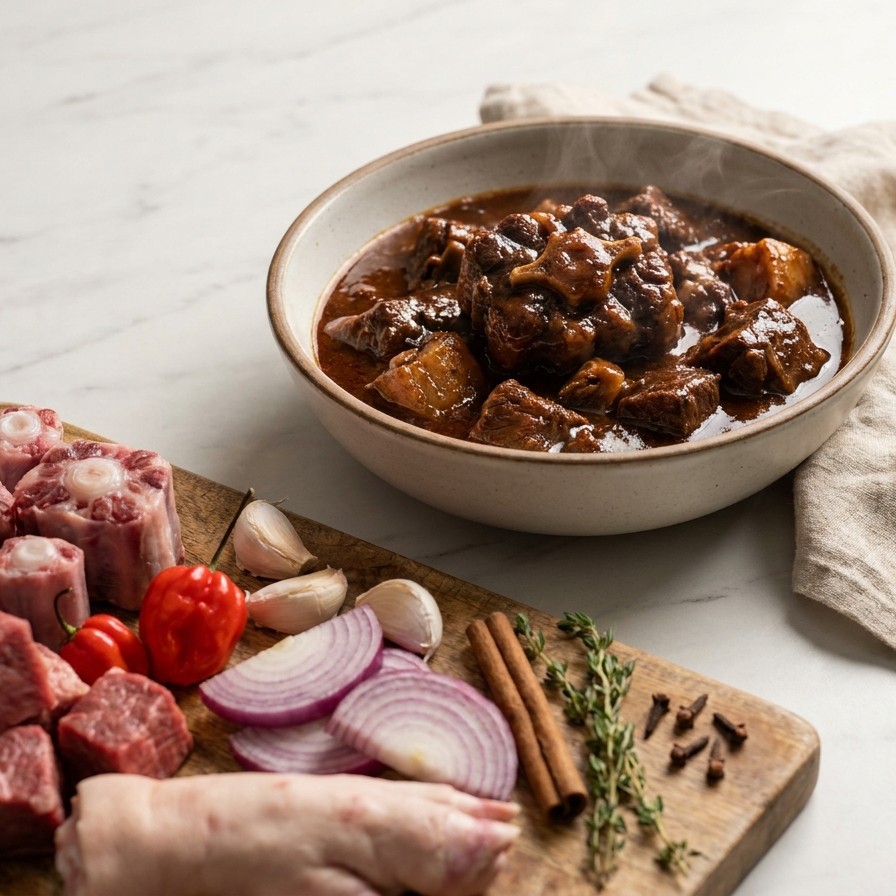
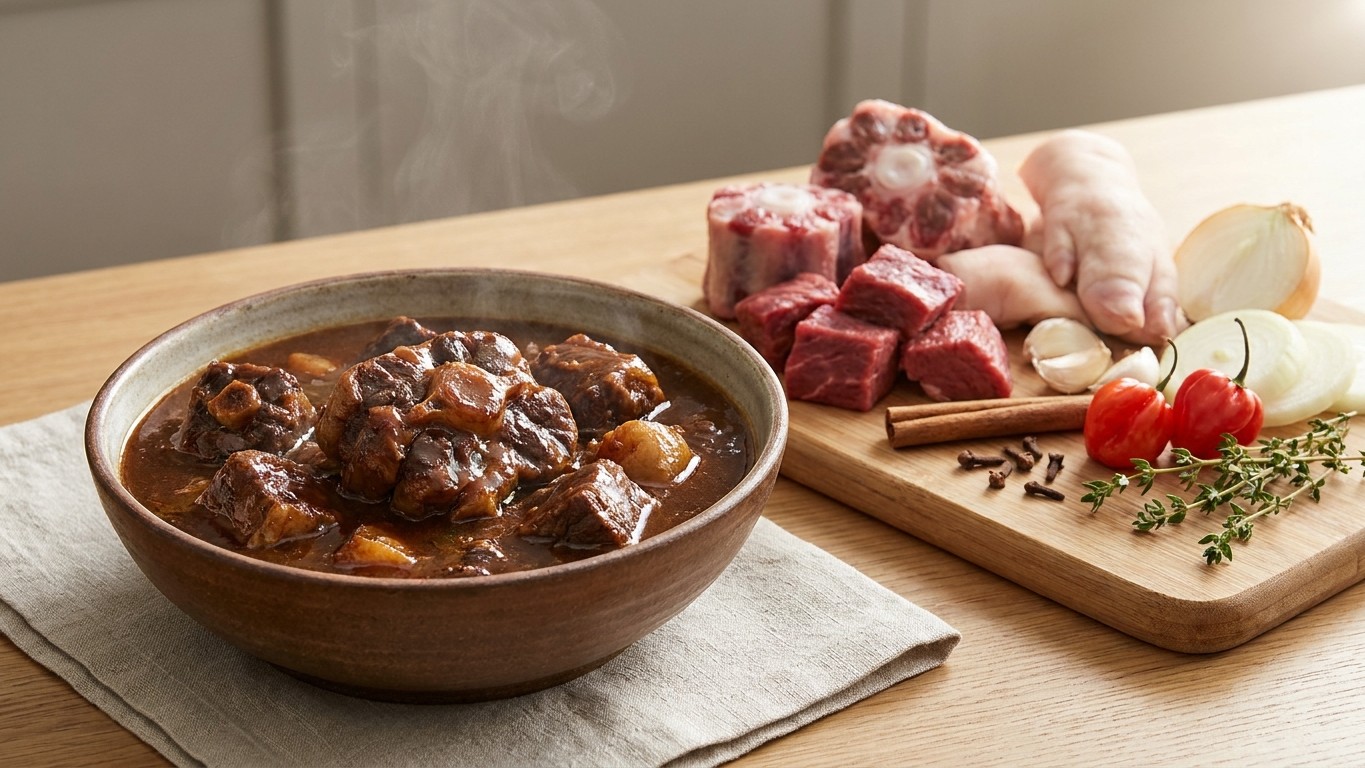
This Bajan classic is a deeply savory, slow-simmered stew of beef, oxtail, and pig's trotters perfumed with cinnamon, cloves, and fiery Scotch bonnet. It is the kind of pot that tastes even better on day two, so make it ahead and let the flavors settle. Fair warning: those peppers are serious, so handle them with care.
Why you'll love this
- Rich, bone-deep flavor from slow-simmered oxtail and trotters.
- Gets better every time you reheat it.
- Just one pot and a handful of pantry spices.
- That warm cinnamon-and-clove backbone sets it apart from any ordinary stew.
EveryDayMeal recipe
Barbados Pepperpot
Prep
25m
Cook
180m
Total
205m
Serves
6
Level
Medium
Ingredients
- 2 pig's trotters
- 2 pounds oxtail
- 2 pounds beef stewing steak
- a splash (about 2 tablespoons) lime juice
- 3 cloves garlic, thinly sliced
- 2 Scotch bonnet peppers, finely chopped
- 1 large onion, sliced
- 1 cinnamon stick
- 2 whole cloves
- a pinch granulated sugar
- a pinch, to taste salt
- a sprinkling fresh basil, chopped
- a sprinkling fresh thyme, chopped
Equipment
- Large heavy pot or Dutch oven
- Sharp chef's knife
- Cutting board
- Mixing bowl
- Rubber gloves
Instructions
- Rinse the stewing steak and place it in a bowl with the lime juice, turning to coat, then set it aside to brighten and clean the meat while you prep everything else.
- Thinly slice the garlic and onion, and chop the basil and thyme so your aromatics are ready to go in quickly.
- Carefully chop the Scotch bonnet peppers into fine pieces, wearing rubber gloves or keeping your fingers off the flesh. Wash your hands right away and never touch your eyes, because the oils in these peppers burn skin on contact.
- Rinse the lime juice off the steak and cut the meat into bite-size cubes. Chop the pig's trotters and oxtail into similar-size pieces so everything cooks evenly.
- Fill a large pot with water and bring it to a rolling boil, then add the pig's trotters and boil them to release impurities and start softening the tough cuts.
- Drain off that water, add the stewing steak and oxtail, and cover with fresh hot water so the stew starts clean and the broth stays clear.
- Stir in the garlic, onion, and Scotch bonnet peppers, then add the cinnamon stick, cloves, basil, thyme, and a pinch each of salt and sugar to balance the heat.
- Simmer gently, partly covered, until the meat is fork-tender and pulling away from the bone, about 2 to 3 hours. The flavor deepens over several days, so always reheat the whole pot to a full boil before serving.
Tips from the kitchen
- Use gloves for the Scotch bonnets and start with less if you are heat-shy, since you can taste and adjust as it simmers.
- Skim any foam that rises in the first 30 minutes for a cleaner, richer broth.
- Make it a day ahead. The flavor truly improves overnight as the spices mellow.
Estimated nutrition per serving: 540 cal · 42g protein · 6g carbs · 38g fat
Make it your own
- Swap the stewing steak for extra oxtail for an even richer, more gelatinous pot.
- Can't find Scotch bonnets? Use habaneros for the same fruity heat.
- Add a splash of dark rum or a spoonful of brown sugar for a sweeter, caramelized depth.
Storing & make-ahead
Cool completely, then refrigerate in an airtight container up to 4 days. Always reheat the entire pot to a full boil before serving. It also freezes well for up to 3 months.
Good to know
- Where can I buy pig's trotters and oxtail?
- Check the meat counter at a well-stocked grocery store, a butcher, or a Caribbean or Latin market. Ask the butcher to chop them into pieces for you.
- How spicy is this dish?
- Scotch bonnets are very hot. Two peppers make a fiery pot, so use one (or seed them) for a milder version you can still taste the spices in.
- Can I make it in a slow cooker?
- Yes. Boil the trotters first, then transfer everything to the slow cooker and cook on low for 7 to 8 hours until the meat is tender.
- Why boil the trotters separately first?
- That first boil removes impurities and foam, giving you a cleaner, clearer broth before the real simmering begins.
Related recipes
Dinner
Bulgarian Potato Moussaka
Dinner
Piri-Piri Chicken with Winter Slaw
Dinner
Skillet Apple Pork Chops with Roasted Sweet Potatoes and Zucchini
Love this? Get one every day.
Every meal, sorted. Free daily recipes in your inbox.