Dinner · Chinese
Beef Lo Mein

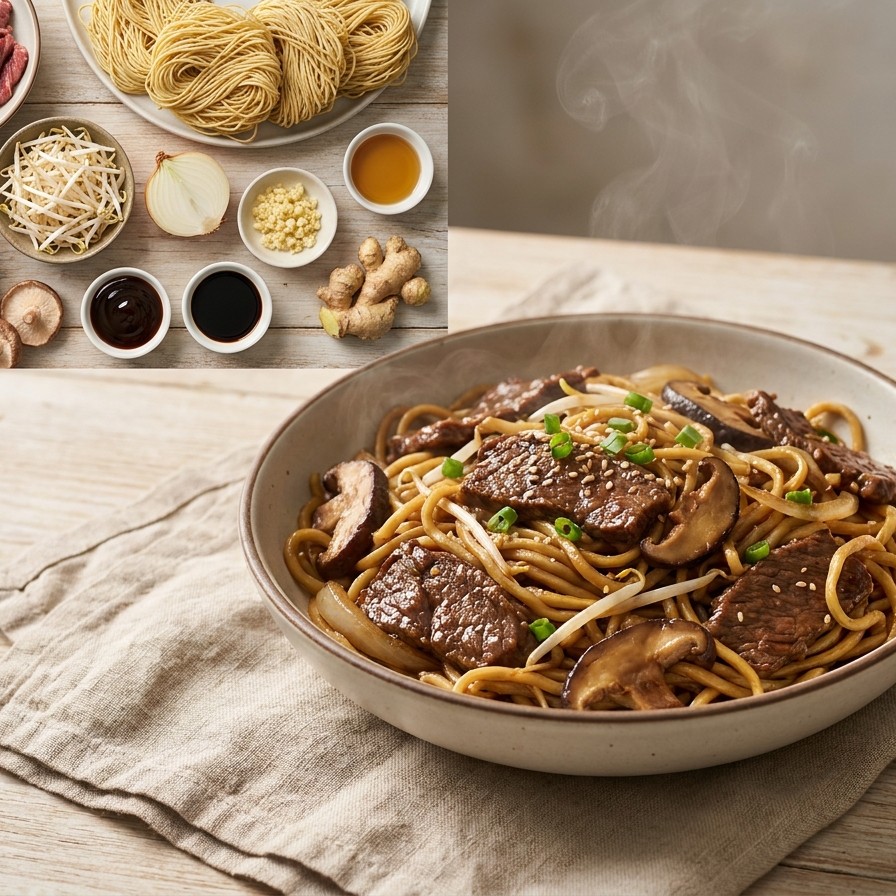
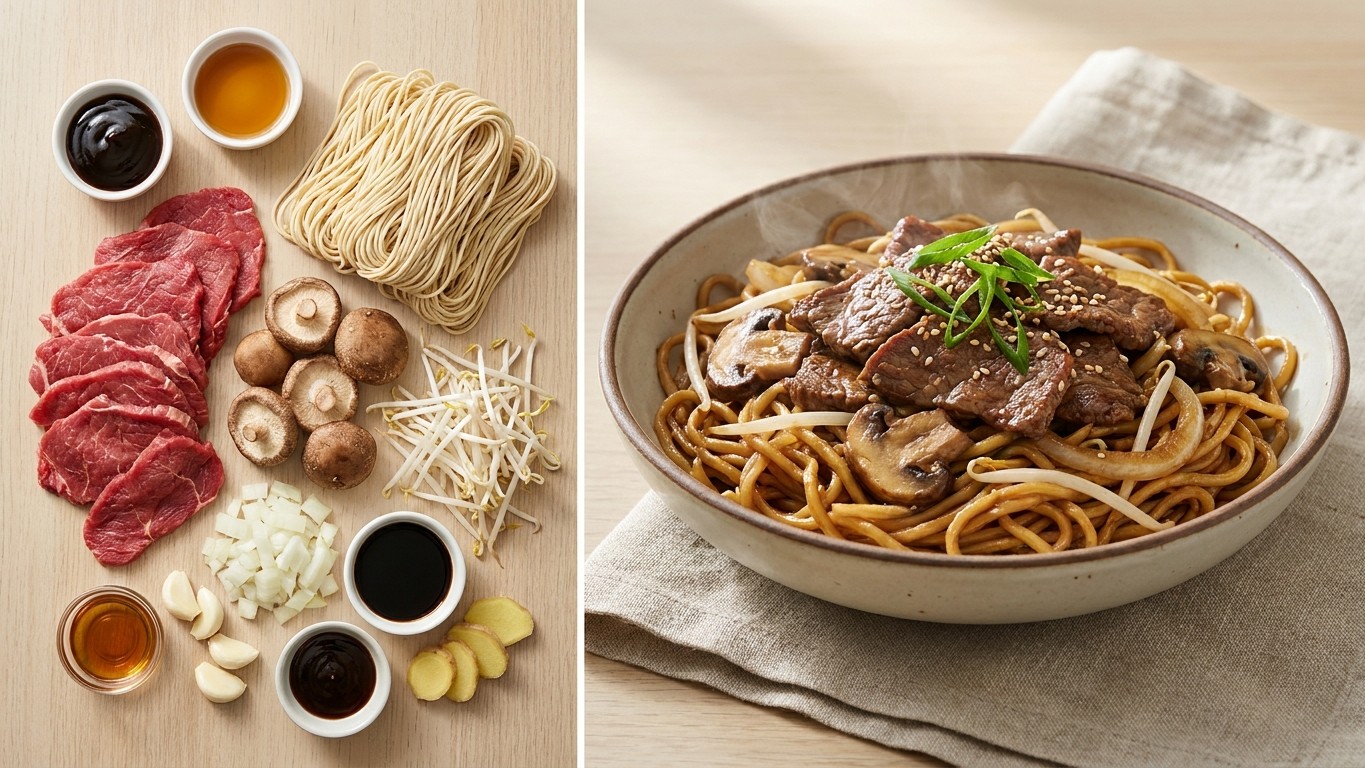
This beef lo mein comes together faster than takeout and tastes better too, with tender marinated beef, springy noodles, and crisp vegetables in a glossy sauce. It is a great way to use up whatever veggies are in your fridge, and the whole thing lands on the table in about half an hour.
Why you'll love this
- Faster and fresher than delivery
- Uses simple pantry sauces you likely have
- Easy to customize with whatever veggies you have
- One skillet gets you dinner in 30 minutes
EveryDayMeal recipe
Beef Lo Mein
Prep
15m
Cook
15m
Total
30m
Serves
2
Level
Easy
Ingredients
- 1/2 lb beef, thinly sliced (flank or sirloin)
- pinch salt
- 2 pinches white pepper
- 2 tsp toasted sesame oil
- 1/2 egg, lightly beaten
- 3 tbsp cornstarch
- 5 tbsp vegetable oil, divided
- 1/4 lb lo mein or egg noodles
- 1/2 cup onion, sliced
- 1 tsp minced garlic
- 1 tsp minced fresh ginger
- 1 cup bean sprouts
- 1 cup mushrooms, sliced
- 1 to 1 1/2 cups water
- 1 tbsp oyster sauce
- 1 tsp granulated sugar
- 1 tsp soy sauce
Equipment
- Wok or large skillet
- Large pot
- Mixing bowl
- Colander
- Tongs or spatula
Instructions
- In a bowl, combine the sliced beef with the salt, a pinch of white pepper, 1 teaspoon of the sesame oil, the beaten half egg, the cornstarch, and 1 tablespoon of the oil. Mix until the beef is evenly coated, which gives it that silky, tender texture once cooked.
- Bring a large pot of water to a rolling boil and add the noodles, pushing them under the surface. Boil just briefly (about 10 to 20 seconds for fresh noodles, or per package directions for dried), then drain and rinse under cold water so they stop cooking and do not clump.
- Heat 2 tablespoons of oil in a wok or large skillet over high heat. Add the beef and stir-fry until it is just about medium, still slightly pink in spots, then transfer it to a plate. It will finish cooking later, so do not overdo it.
- In the same wok, add the remaining 2 tablespoons of oil along with the onion, garlic, ginger, bean sprouts, and mushrooms. Stir-fry for about a minute until fragrant, then pour in 1 to 1 1/2 cups of water, enough to just about cover the vegetables, and let it come to a simmer.
- Add the drained noodles to the wok and toss so they soak up the liquid and heat through.
- Stir in the oyster sauce, a pinch of white pepper, the remaining 1 teaspoon sesame oil, the sugar, and the soy sauce until everything is glossy and well coated.
- Return the beef to the wok and stir-fry everything together for another minute or two, until the beef is cooked through and the sauce clings to the noodles. Serve hot.
Tips from the kitchen
- Slice the beef against the grain and as thin as you can (freezing it for 15 minutes first makes this easier) for the most tender bite.
- Have everything prepped and lined up before you start, because stir-frying over high heat moves fast.
- Do not overcook the noodles when boiling; they finish softening in the wok, so a quick dip keeps them from turning mushy.
Estimated nutrition per serving: 620 cal · 32g protein · 48g carbs · 34g fat
Make it your own
- Swap the beef for sliced chicken, shrimp, or tofu.
- Add snow peas, shredded carrots, or napa cabbage for extra crunch and color.
- For more sauce, double the oyster sauce, soy sauce, and sugar and thicken with a cornstarch slurry.
Storing & make-ahead
Store leftovers in an airtight container in the fridge for up to 3 days. Reheat in a hot skillet with a splash of water to loosen the noodles, or microwave in short bursts, stirring between them.
Good to know
- What cut of beef works best?
- Flank steak or sirloin are ideal because they stay tender when sliced thin against the grain and cooked quickly over high heat.
- Can I use spaghetti instead of lo mein noodles?
- Yes. In a pinch, cooked spaghetti or thin egg noodles work fine. Just boil according to the package and rinse in cold water.
- Why rinse the noodles in cold water?
- It stops the cooking and rinses off surface starch so the noodles do not stick together before they hit the wok.
- Is oyster sauce necessary?
- It adds savory depth, but you can substitute hoisin sauce or extra soy sauce with a little more sugar if you do not have it.
Related recipes

Love this? Get one every day.
Every meal, sorted. Free daily recipes in your inbox.