Dinner · French
Classic Duck Confit

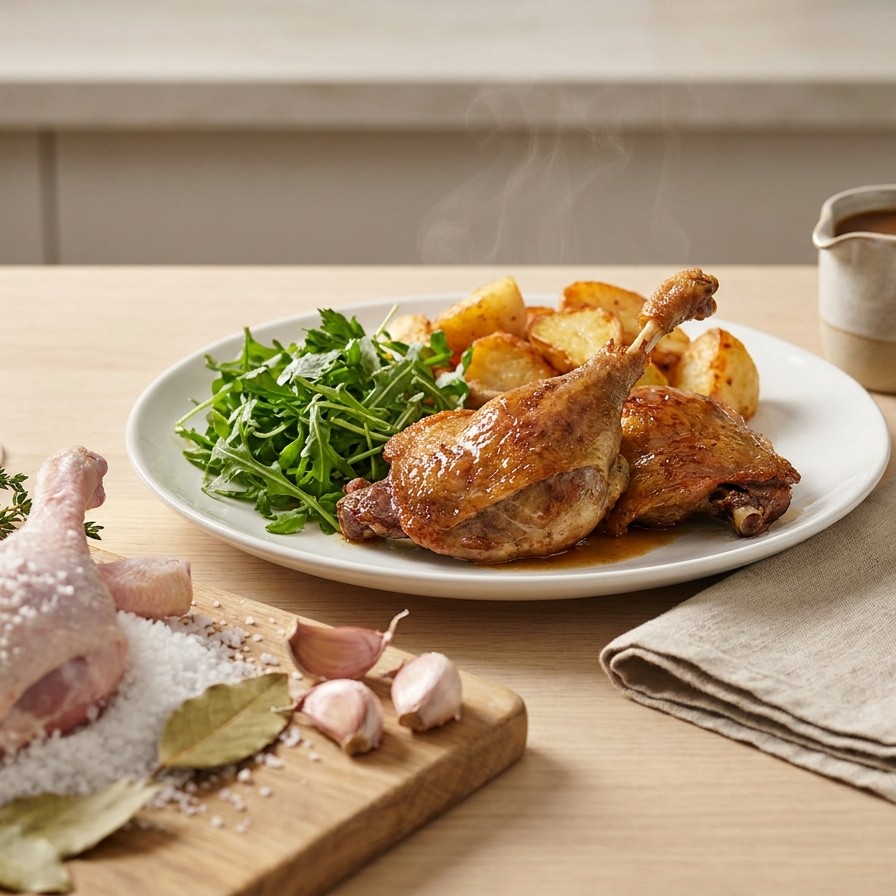
This is the restaurant trick that feels fancy but mostly cooks itself. You cure duck legs in salt and herbs overnight, then poach them low and slow until they melt in their own fat. Finish in a hot oven for shatteringly crisp skin whenever you're ready to eat.
Why you'll love this
- Tastes like a fancy bistro dinner but is mostly hands-off.
- Make it weeks ahead and crisp the legs in minutes.
- That shatter-crisp skin over tender, fall-apart meat.
- You get rich duck fat for cooking as a bonus.
EveryDayMeal recipe
Classic Duck Confit
Prep
15m
Cook
160m
Total
175m
Serves
4
Level
Medium
Ingredients
- 4 duck legs
- about 1/4 cup sea salt
- 4 garlic cloves
- 4 bay leaves
- a small handful of sprigs fresh thyme
- 1/2 cup (about 3 1/2 ounces) white wine
Equipment
- Shallow dish for curing
- Lidded saucepan that fits the legs snugly
- Ovenproof skillet
- Storage container or jar
Instructions
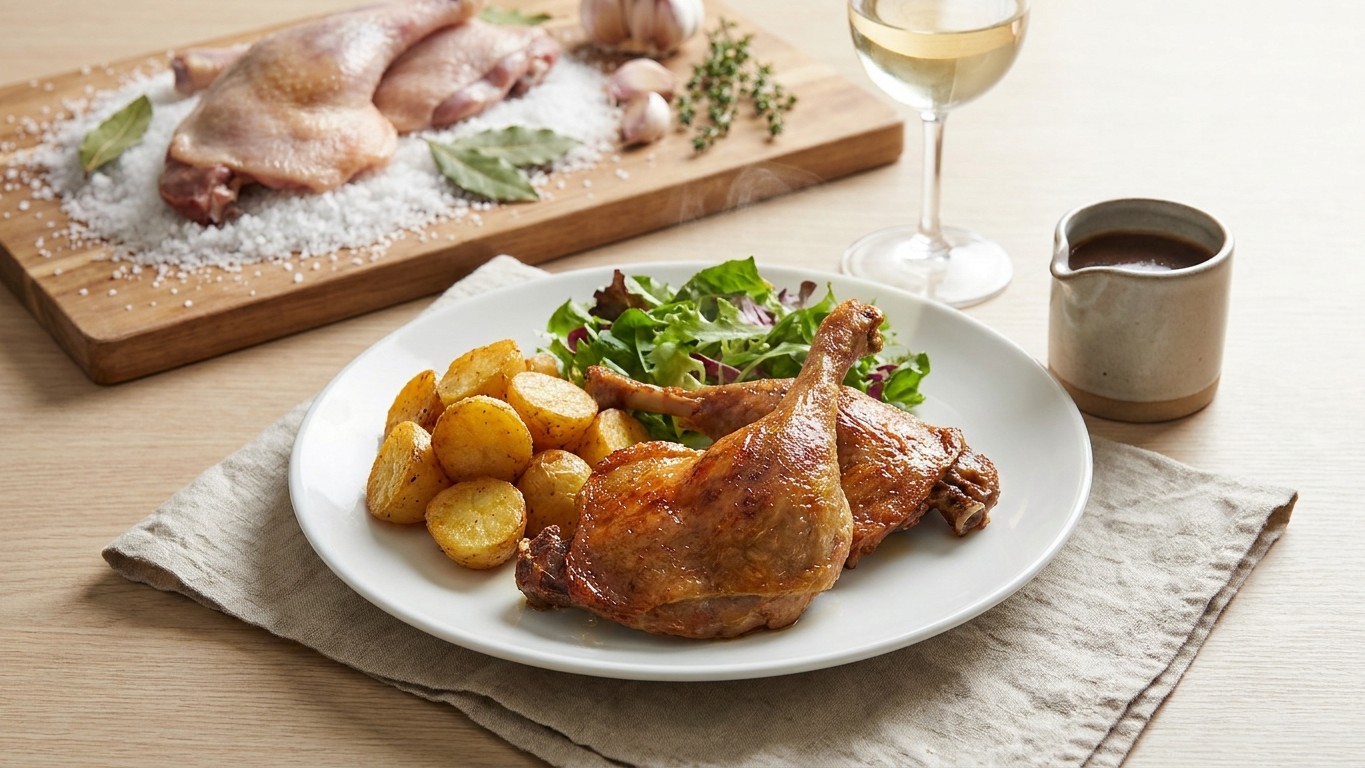
- The day before cooking, scatter half the salt, 2 smashed garlic cloves, 2 bay leaves, and half the thyme over the bottom of a small shallow dish. This starts drawing moisture out of the duck so it cures evenly.
- Lay the duck legs skin side up on top, then cover them with the remaining salt, garlic, and herbs. Cover and refrigerate overnight (or up to 2 days) so the salt seasons the meat all the way through.
- The next day, pour the wine into a saucepan that fits all 4 legs snugly in a single layer. Brush the salt off the duck and place the legs skin side down in the wine.
- Cover with a lid and set over medium heat. As soon as the wine bubbles, drop the heat to its lowest setting so the liquid barely trembles, not boils, which keeps the meat silky instead of tough.
- Cook gently for 2 hours. The legs will release their own fat and sink into it, and the meat should feel meltingly tender when you prod it. Let them cool in the fat.
- At this point the duck is fully cooked. To store, pack the legs tightly into a container, pour the fat over them (leave the juices in the pan), and refrigerate up to 1 month or freeze up to 3 months. Save the pan juices for gravy.
- To crisp before serving, heat the oven to 425 degrees F. Lift the legs from the fat and set them skin side down in an ovenproof skillet.
- Roast 30 to 40 minutes, turning halfway, until the skin is deep brown and crackling crisp. Serve with warmed gravy, a sharp green salad, and golden potatoes.
Tips from the kitchen
- Brush the cure off well before cooking, otherwise the finished duck can taste too salty.
- A heat diffuser under the pan keeps the simmer gentle and steady, which is the whole secret to tender confit.
- Don't toss the leftover duck fat. It keeps for weeks and makes the best roast potatoes of your life.
Estimated nutrition per serving: 480 cal · 38g protein · 1g carbs · 36g fat
Make it your own
- Add orange zest to the cure for a brighter, citrus-edged flavor.
- Swap the white wine for a splash of brandy for deeper richness.
- Shred the leftover meat into a warm salad or over white beans.
Storing & make-ahead
Pack the cooked legs in a container, cover fully with the strained fat, and refrigerate up to 1 month or freeze up to 3 months. Reheat and crisp in a 425 degree F oven. The pan juices make great gravy and freeze well.
Good to know
- Can I skip the overnight cure?
- Not really. The salt cure seasons the meat deeply and firms it up, which is what makes confit taste like confit. Give it at least overnight.
- Do I need a special pan?
- No, just one that holds the legs in a single snug layer with a tight lid. Snug matters so the fat covers the meat as it cooks.
- Why is my duck too salty?
- The salt wasn't brushed off well enough before cooking. Wipe each leg thoroughly, and a quick rinse and pat dry is fine too.
- How do I know it's done?
- After about 2 hours of the barest simmer, the meat should feel very tender when prodded and the legs will sit in their own fat.
Related recipes

Love this? Get one every day.
Every meal, sorted. Free daily recipes in your inbox.