Sides · Saudi Arabian
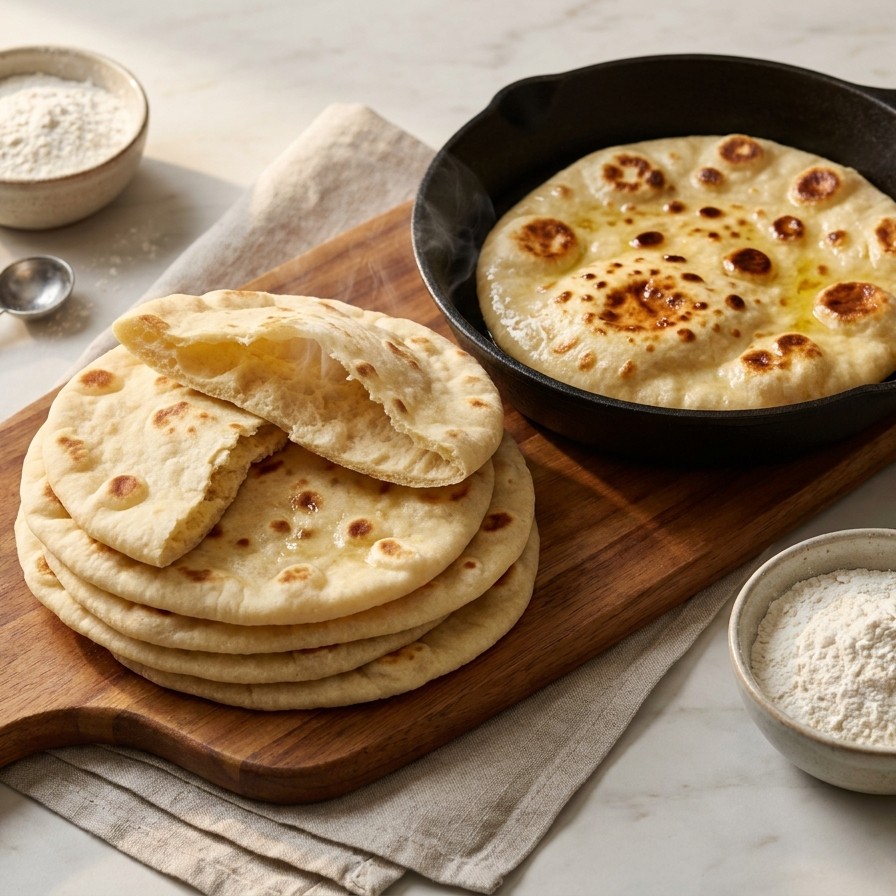
Homemade Shawarma Flatbread

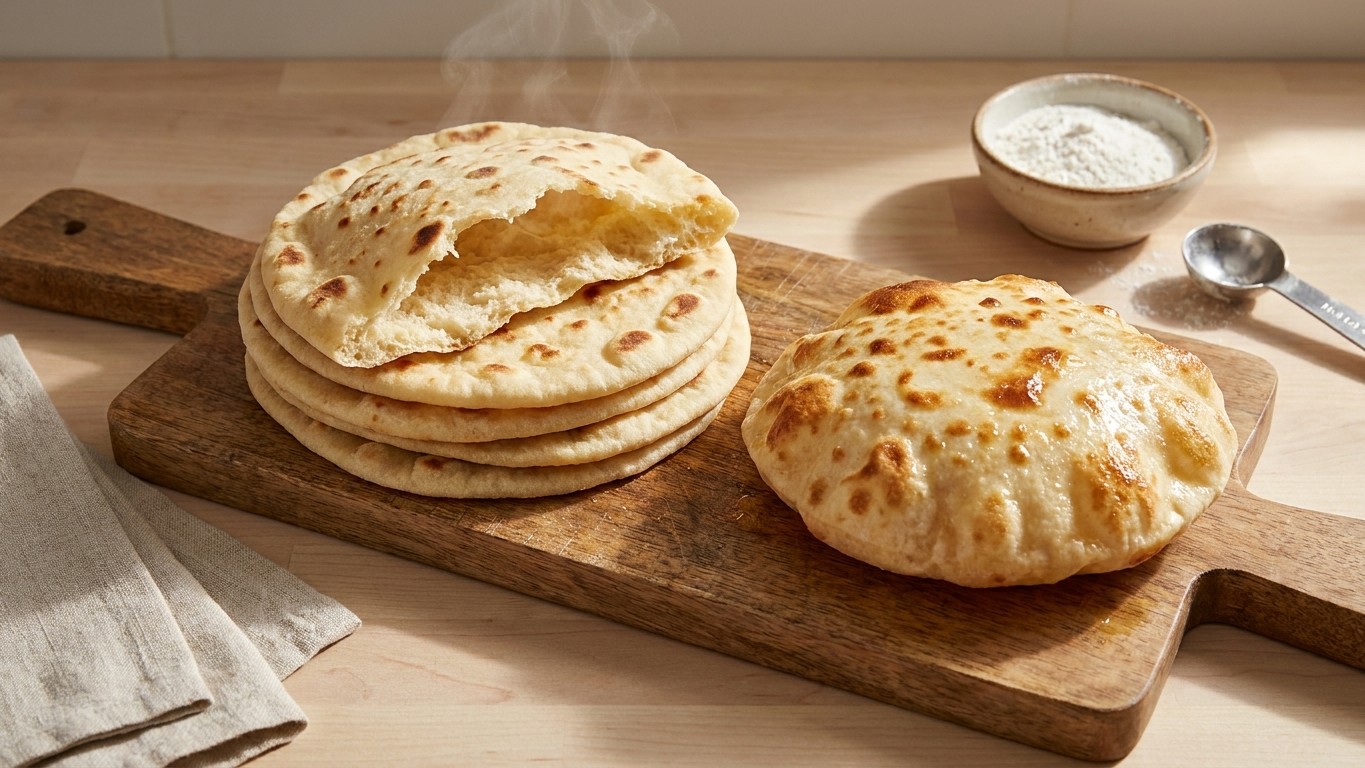
Soft, pillowy flatbread with a built-in pocket, perfect for wrapping up shawarma, falafel, or anything saucy. It comes together with pantry staples and cooks in a hot skillet in minutes. Once you make your own, the store-bought stuff feels like a distant memory.
Why you'll love this
- Just six simple pantry ingredients, no yeast required.
- Cooks in a skillet in minutes, no oven needed.
- Soft and foldable, perfect for shawarma or any wrap.
- Way fresher and cheaper than packaged flatbread.
EveryDayMeal recipe
Homemade Shawarma Flatbread
Prep
15m
Cook
10m
Total
55m
Serves
4
Level
Easy
Ingredients
- 1 cup all-purpose flour
- 1 teaspoon salt
- 1/2 teaspoon granulated sugar
- 1/2 teaspoon baking powder
- 1 tablespoon vegetable oil
- about 1/3 cup, as needed warm water
Equipment
- Mixing bowl
- Rolling pin
- Large skillet or griddle
- Clean kitchen towel
Instructions
- Sift the flour into a mixing bowl, then stir in the salt, sugar, and baking powder so everything is evenly distributed. Add the oil and rub it through with your fingers until the flour looks slightly crumbly.
- Pour in the warm water a little at a time, mixing as you go, until a shaggy dough forms. You want it soft but not sticky, so add water slowly rather than all at once.
- Knead the dough on a lightly floured surface for about 10 minutes, until it turns smooth and springs back when you press it. This builds the structure that gives you a soft, stretchy bread.
- Cover the bowl with a damp towel and let the dough rest in a warm spot for at least 30 minutes, so it relaxes and becomes easy to roll out.
- Divide the dough and roll each piece into a thin round, about 8 inches across. A plate or pot lid makes a handy guide if you want clean edges.
- Heat a dry skillet over medium-high until good and hot. Lay a round of dough in the pan and let it cook undisturbed until bubbles form and the bottom shows golden spots, about 1 to 2 minutes.
- Flip the bread and cook the other side until it puffs up and is cooked through, another 1 to 2 minutes. The puffing is what creates the pocket inside.
- Transfer the finished bread to a clean towel and wrap it to keep warm and soft. Resting under the towel traps steam, which helps the pocket set so it is ready to fill.
Tips from the kitchen
- Keep your skillet hot. A pan that is too cool means the bread steams instead of puffing, and you lose the pocket.
- If the dough feels tight while rolling, let it rest another 5 minutes so the gluten relaxes and it rolls out easily.
- Stack the cooked breads in a towel right away to keep them soft and pliable for wrapping.
Estimated nutrition per serving: 150 cal · 3g protein · 25g carbs · 4g fat
Make it your own
- Swap in half whole wheat flour for a nuttier, heartier bread.
- Brush the warm breads with a little olive oil and a sprinkle of za'atar for extra flavor.
- Add a pinch of garlic powder to the dough for a savory twist.
Storing & make-ahead
Store cooled breads in an airtight bag at room temperature for up to 2 days or refrigerate for up to 5 days. Reheat in a dry skillet or wrapped in a damp paper towel in the microwave for 15 seconds to bring back softness. The dough can also be made ahead and chilled overnight.
Good to know
- Why isn't my bread puffing up?
- The most common reason is a skillet that isn't hot enough. Make sure the pan is fully preheated over medium-high, and roll the dough evenly so steam can build up inside.
- Can I make these without baking powder?
- Baking powder gives lift and helps with the pocket, but you can skip it for a flatter, denser bread that still works for wraps.
- How thin should I roll the dough?
- About 1/8 inch thick is ideal. Too thick and it won't puff well; too thin and it can tear.
- Can I freeze them?
- Yes. Stack cooled breads with parchment between each, seal in a freezer bag, and freeze up to 2 months. Reheat straight from frozen in a hot skillet.
Related recipes
Love this? Get one every day.
Every meal, sorted. Free daily recipes in your inbox.