Dinner · Japanese
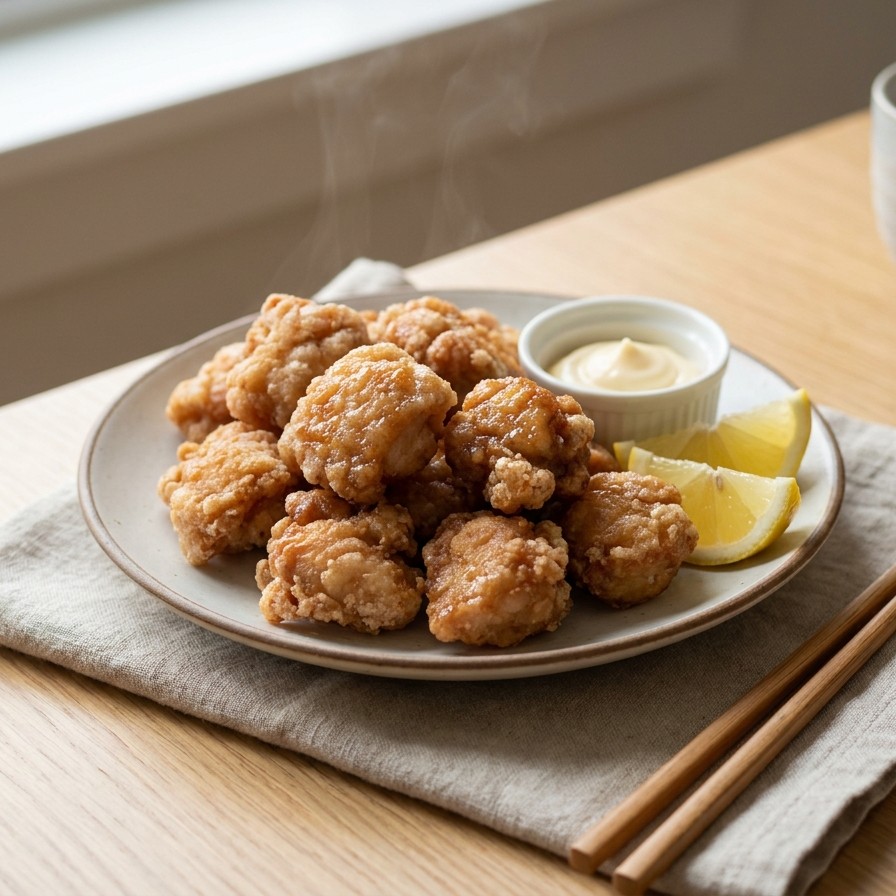
Chicken Karaage (Japanese Fried Chicken)

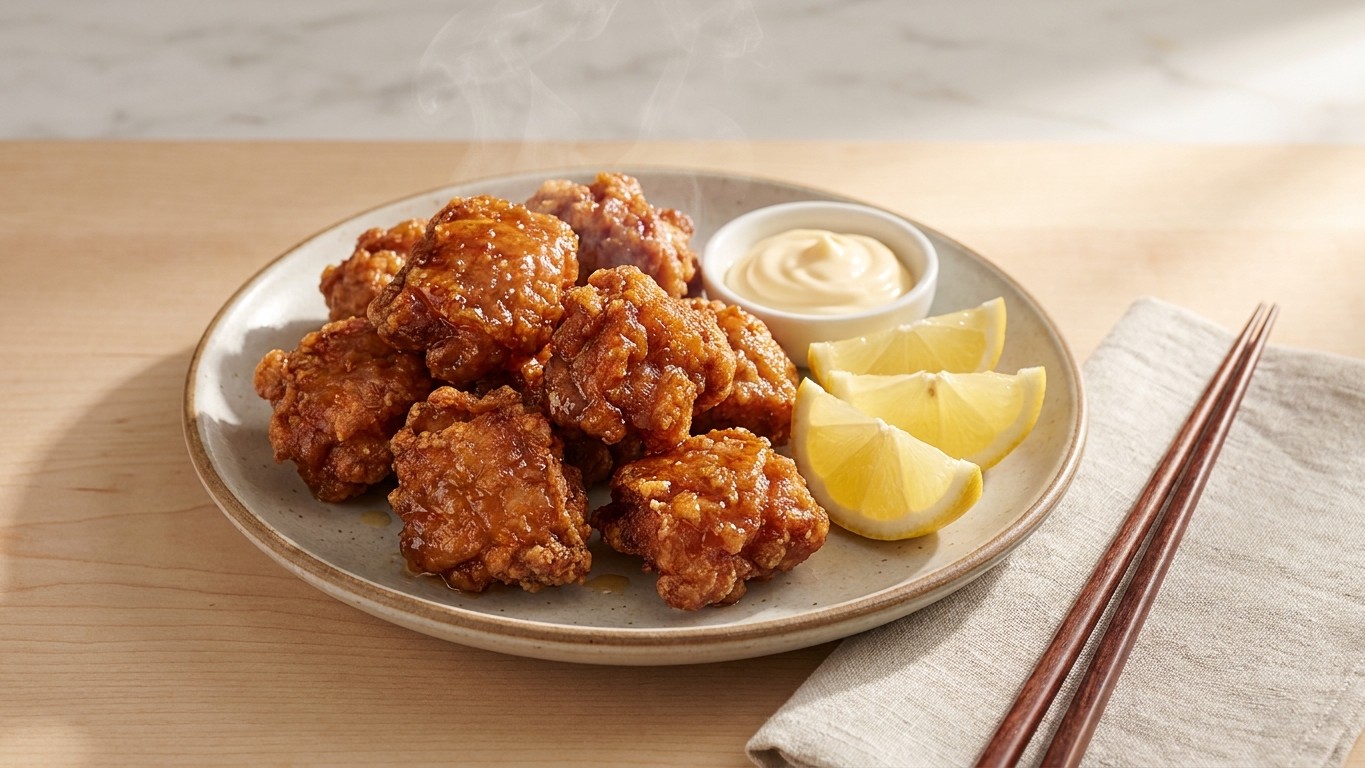
This Japanese fried chicken is marinated in ginger, garlic, and soy, then coated in potato starch for a crackly, ultra light crust. Each bite stays juicy inside while the outside shatters. Serve it hot with a squeeze of lemon and watch it disappear.
Why you'll love this
- Shatteringly crisp crust with juicy chicken inside.
- The marinade does the flavor work, so the coating is simple.
- Great hot or at room temperature for lunchboxes.
- Ready start to finish in about an hour and a half, mostly hands-off.
EveryDayMeal recipe
Chicken Karaage (Japanese Fried Chicken)
Prep
15m
Cook
15m
Total
90m
Serves
4
Level
Medium
Ingredients
- 1 pound boneless skin-on chicken thighs, cut into bite-size pieces
- 1 tablespoon fresh ginger, grated
- 1 garlic clove, grated
- 2 tablespoons soy sauce
- 1 tablespoon sake
- 2 teaspoons granulated sugar
- 1/3 cup potato starch
- about 2 cups vegetable oil, for frying
- 1 lemon, cut into wedges
Equipment
- Heavy-bottomed pot or Dutch oven
- Deep-fry or candy thermometer
- Wire rack
- Tongs
- Mixing bowls
Instructions
- In a bowl, whisk together the grated ginger, garlic, soy sauce, sake, and sugar until the sugar dissolves, so every piece of chicken picks up the same savory-sweet flavor.
- Add the chicken and stir to coat each piece well. Cover and refrigerate for at least 1 hour (or up to overnight) to let the marinade soak in.
- Pour about 1 inch of vegetable oil into a heavy-bottomed pot and heat to 360 degrees F. Use a thermometer, since oil that is too cool makes greasy chicken and too hot burns the coating before the inside cooks.
- Line a wire rack with two layers of paper towels and set it nearby, along with your tongs. Put the potato starch in a shallow bowl.
- Add a handful of chicken to the potato starch and toss to coat each piece evenly, shaking off the excess so the crust stays light and crisp.
- Fry the chicken in batches until the outside is medium brown and the chicken is cooked through, about 4 to 5 minutes. Don't crowd the pot or the oil temperature will drop.
- Transfer each batch to the paper towel-lined rack to drain. For extra-crispy karaage, let the pieces cool, then fry a second time until deep golden brown.
- Pile onto a plate and serve hot with lemon wedges for squeezing over the top.
Tips from the kitchen
- Grate the ginger and garlic on a fine grater so they melt into the marinade instead of leaving chunks.
- Keep your oil steady at 360 degrees F. Fry in small batches so the temperature doesn't crash.
- A double fry is the secret to karaage that stays crunchy long after it comes out of the pot.
Estimated nutrition per serving: 380 cal · 26g protein · 12g carbs · 25g fat
Make it your own
- Swap potato starch for cornstarch if that's what you have; the crust will be slightly less delicate.
- Add a teaspoon of toasted sesame oil to the marinade for a nuttier flavor.
- Serve with Japanese mayo or a spicy mayo for dipping instead of just lemon.
Storing & make-ahead
Store leftovers in an airtight container in the fridge for up to 3 days. Reheat in a 400 degree F oven or air fryer for a few minutes to bring back the crunch. Avoid the microwave, which makes the crust soggy.
Good to know
- Can I use chicken breast instead of thighs?
- You can, but thighs stay much juicier. If you use breast, cut it a bit larger and don't overcook.
- What can I use instead of sake?
- Dry sherry works well, or use a splash of water with a pinch of extra sugar. The flavor changes slightly but it still turns out great.
- Why potato starch instead of flour?
- Potato starch fries up lighter and crispier than flour, giving karaage its signature crackly, non-greasy crust.
- How do I know the oil is ready without a thermometer?
- Drop in a pinch of potato starch. It should sizzle steadily and rise to the surface right away, not sink or burn.
Related recipes
Dinner
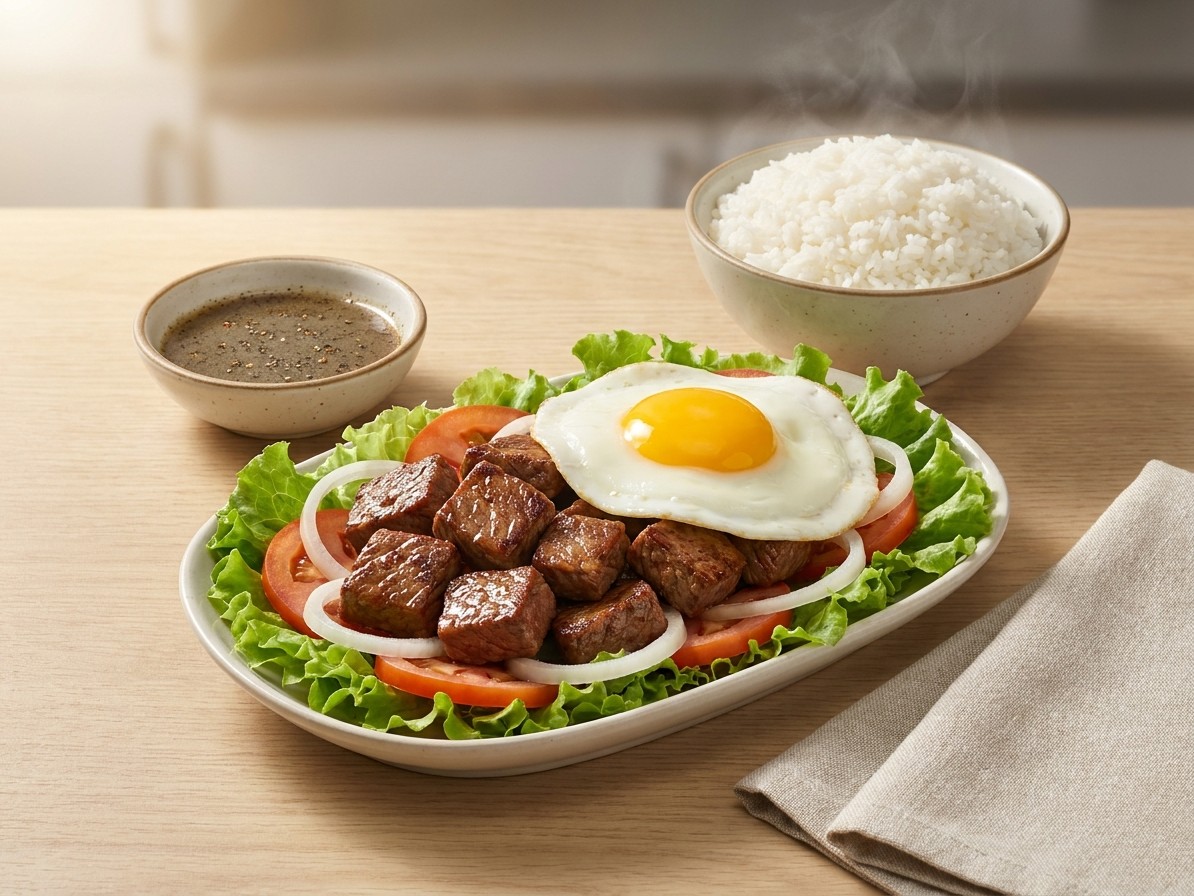
Beef Lok Lak (Cambodian Shaking Beef)
Dinner
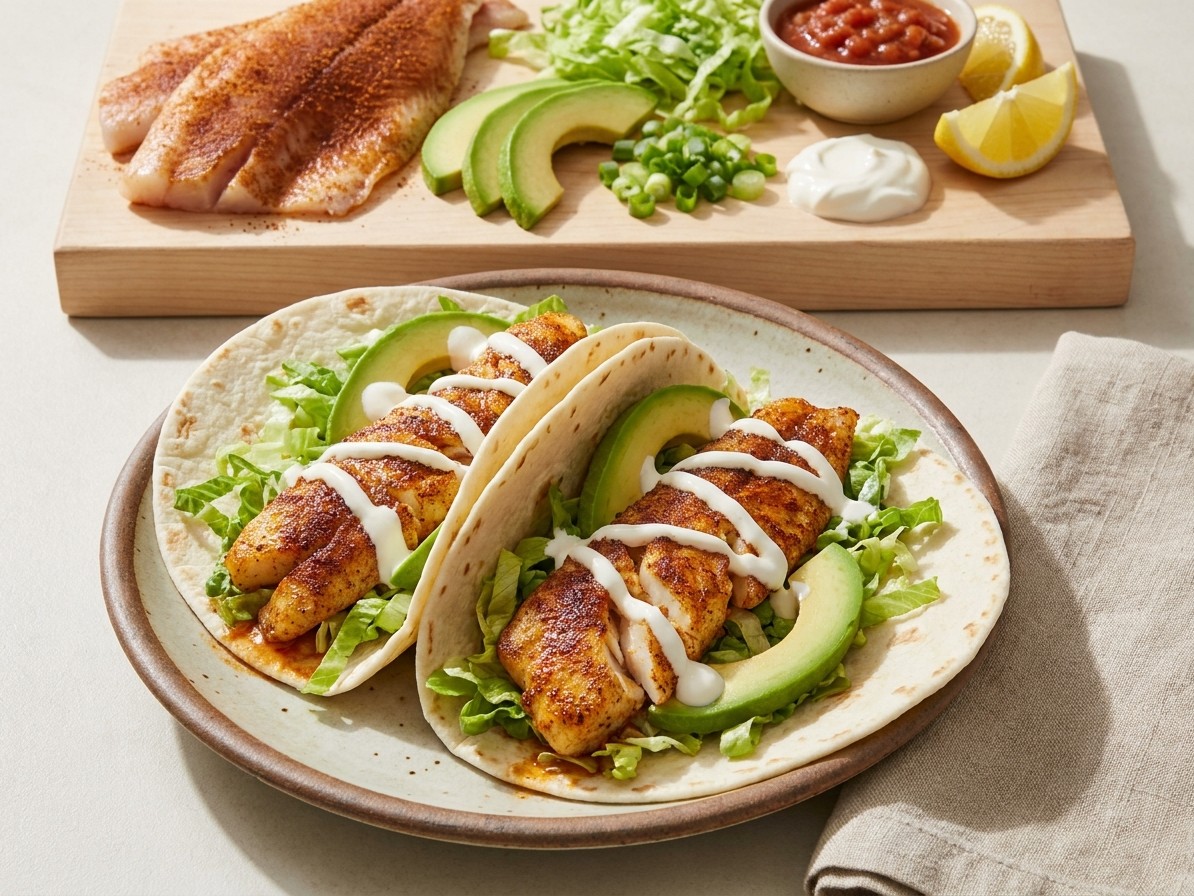
Cajun Spiced Fish Tacos
Dinner
Chicken Parmentier (French Chicken and Potato Bake)
Love this? Get one every day.
Every meal, sorted. Free daily recipes in your inbox.