Dinner · Italian
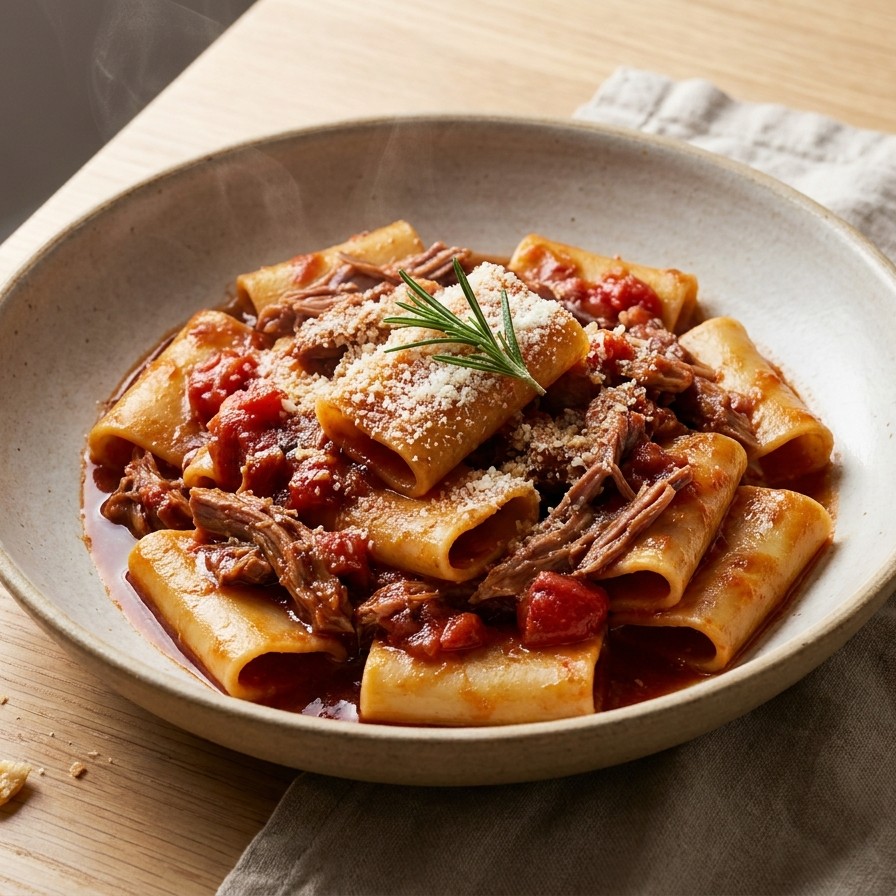
Venetian Duck Ragu with Paccheri

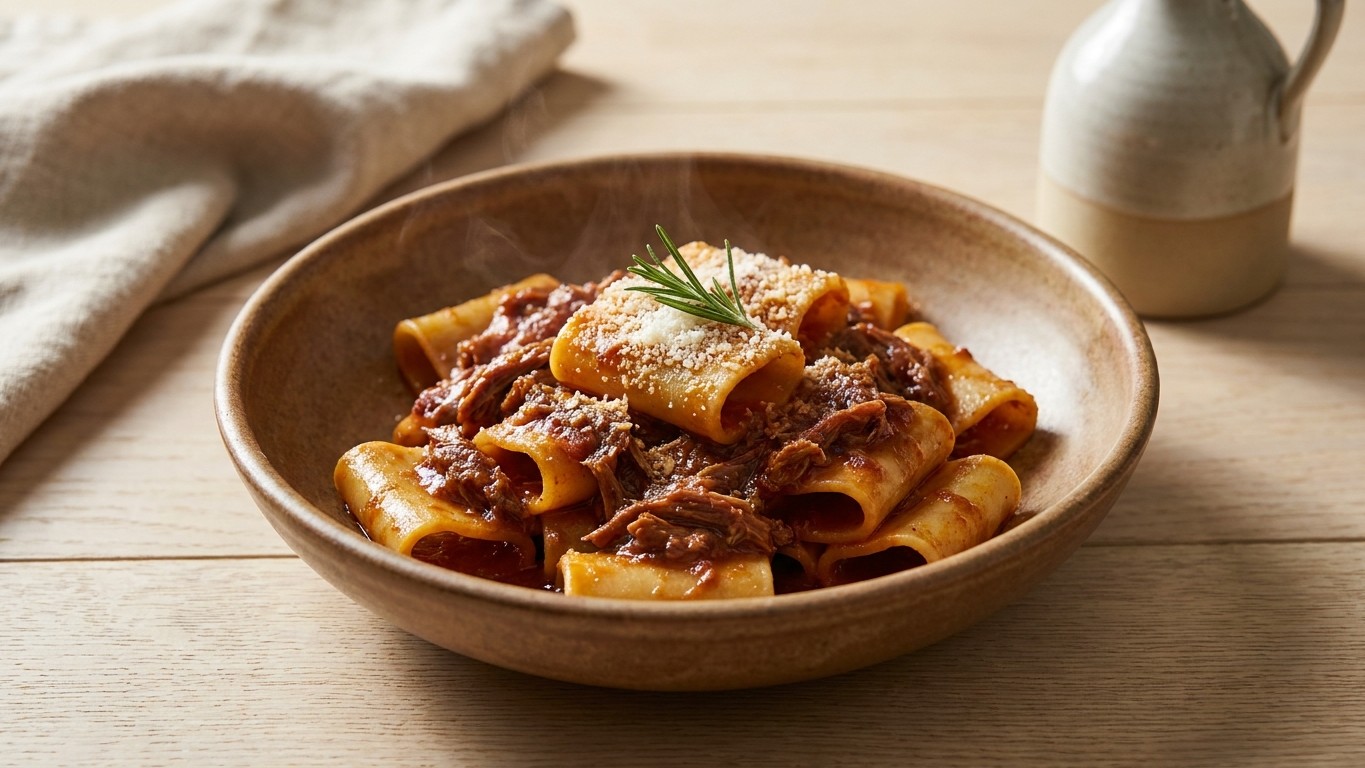
This is the kind of Sunday-worthy pasta that tastes like it came from a trattoria, but it mostly looks after itself in one pot. Duck legs braise low and slow in red wine and tomatoes with a hint of cinnamon, then get shredded back into a silky sauce that clings to big tubes of paccheri. It takes time, but almost none of it is hands-on.
Why you'll love this
- One pot of slow-braised duck does all the heavy lifting.
- Cinnamon and red wine give it a warm, restaurant-style depth.
- Mostly hands-off: brown, simmer, shred, toss.
- Big paccheri tubes catch every bit of the rich sauce.
- Perfect for a cozy dinner party or a lazy Sunday.
EveryDayMeal recipe
Venetian Duck Ragu with Paccheri
Prep
20m
Cook
150m
Total
170m
Serves
6
Level
Medium
Ingredients
- 1 tablespoon olive oil
- 4 duck legs
- 2 onions, finely chopped
- 2 cloves garlic, minced
- 2 teaspoons ground cinnamon
- 2 teaspoons all-purpose flour
- 1 cup red wine
- 28 ounces canned chopped tomatoes
- 1 chicken bouillon cube
- 3 sprigs fresh rosemary
- 2 bay leaves
- 1 teaspoon granulated sugar
- 2 tablespoons milk
- 1 1/4 pounds paccheri pasta
- grated Parmesan, for serving
- to taste salt and pepper
Equipment
- Large Dutch oven or heavy pot with lid
- Tongs
- Two forks for shredding
- Large pot for pasta
- Colander
Instructions
- Heat the olive oil in a large Dutch oven over medium-high heat. Add the duck legs skin side down and brown on all sides, about 10 minutes total, until deeply golden. This builds the rich, savory base of the whole dish, so don't rush it. Move the legs to a plate.
- Lower the heat to medium and add the onions to the rendered fat. Cook for about 5 minutes, stirring now and then, until soft and translucent so the sauce tastes sweet rather than sharp.
- Stir in the garlic and cook for 1 minute, just until fragrant, then add the cinnamon and flour and cook 1 minute more to toast the spice and cook off the raw flour taste.
- Return the duck legs to the pot and pour in the red wine, tomatoes, crumbled bouillon cube, rosemary, bay leaves, and sugar. Season with salt and pepper and bring to a gentle simmer.
- Cover, reduce the heat to low, and braise for 2 hours, stirring occasionally, until the duck is fall-apart tender and the sauce has deepened in color.
- Lift the duck legs onto a plate (they will be very soft, so work gently to keep all the meat). Pull off and discard the skin and fat, shred the meat with two forks, and discard the bones.
- Return the shredded meat to the sauce, stir in the milk to soften and round out the flavor, and simmer uncovered for 10 to 15 minutes while you cook the pasta.
- Cook the paccheri in well-salted boiling water until just al dente, then drain, saving about 1 cup of the pasta water.
- Add the drained pasta to the ragu and toss for about 1 minute so every tube is coated, adding a splash of the reserved pasta water if it looks dry. Serve hot with plenty of grated Parmesan.
Tips from the kitchen
- Brown the duck well and don't crowd the pot, because that deep color is where most of the flavor comes from.
- Skim off excess duck fat before adding the shredded meat back if the sauce looks greasy; a little richness is good, a slick on top is not.
- Make the ragu a day ahead if you can. Like most braises, it tastes even better after resting overnight.
Estimated nutrition per serving: 680 cal · 34g protein · 72g carbs · 26g fat
Make it your own
- No paccheri? Use rigatoni, pappardelle, or any sturdy pasta that holds sauce well.
- Swap the duck legs for chicken thighs for a lighter, quicker version (reduce braise time to about 1 hour).
- Add a pinch of ground cloves or a strip of orange peel to the braise for an extra Venetian touch.
Storing & make-ahead
Cool and refrigerate the ragu (without pasta) in an airtight container for up to 4 days, or freeze for up to 3 months. Reheat gently on the stove with a splash of water, then toss with freshly cooked pasta.
Good to know
- Can I make this ahead?
- Yes, and it's actually better. Make the ragu up to 2 days ahead, chill it, then reheat and toss with fresh pasta before serving.
- What wine should I use?
- A dry red you'd happily drink, like Chianti, Merlot, or Cabernet. Avoid anything labeled cooking wine.
- Can I use duck breast instead of legs?
- Legs are best because they stay tender through long braising. Breast can turn tough and dry, so stick with legs if you can.
- How do I keep the sauce from getting greasy?
- Discard the skin and fat when you shred the duck, and skim any extra fat off the top of the sauce before serving.
Related recipes
Love this? Get one every day.
Every meal, sorted. Free daily recipes in your inbox.