Lunch · British
Creamy Tomato Soup

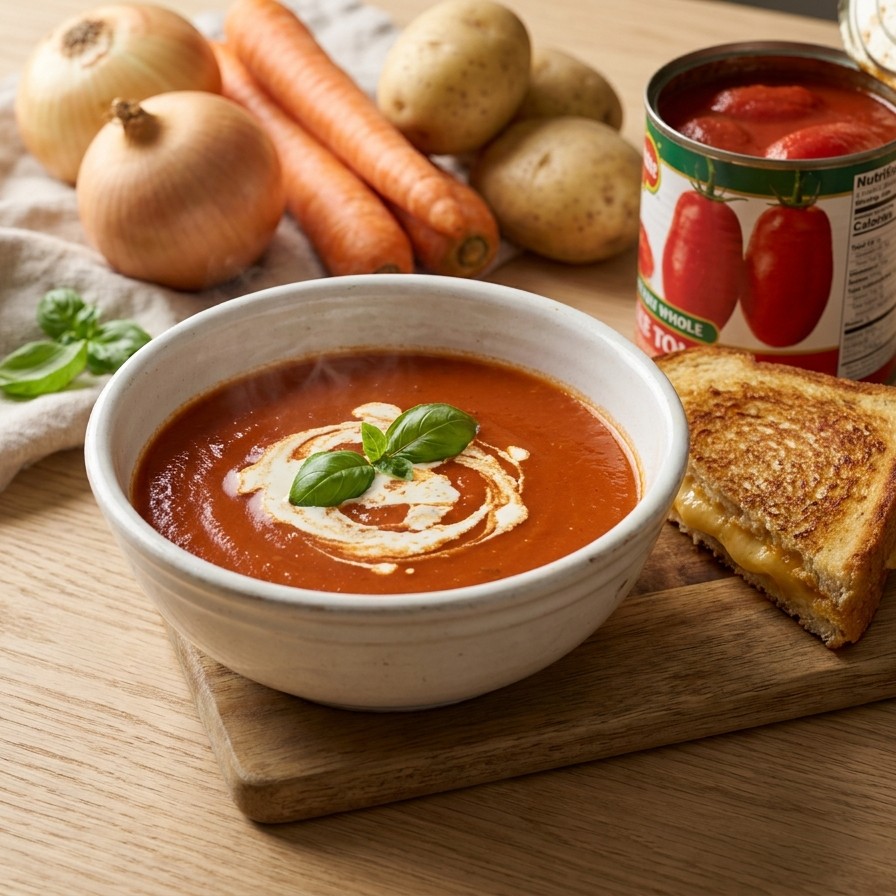
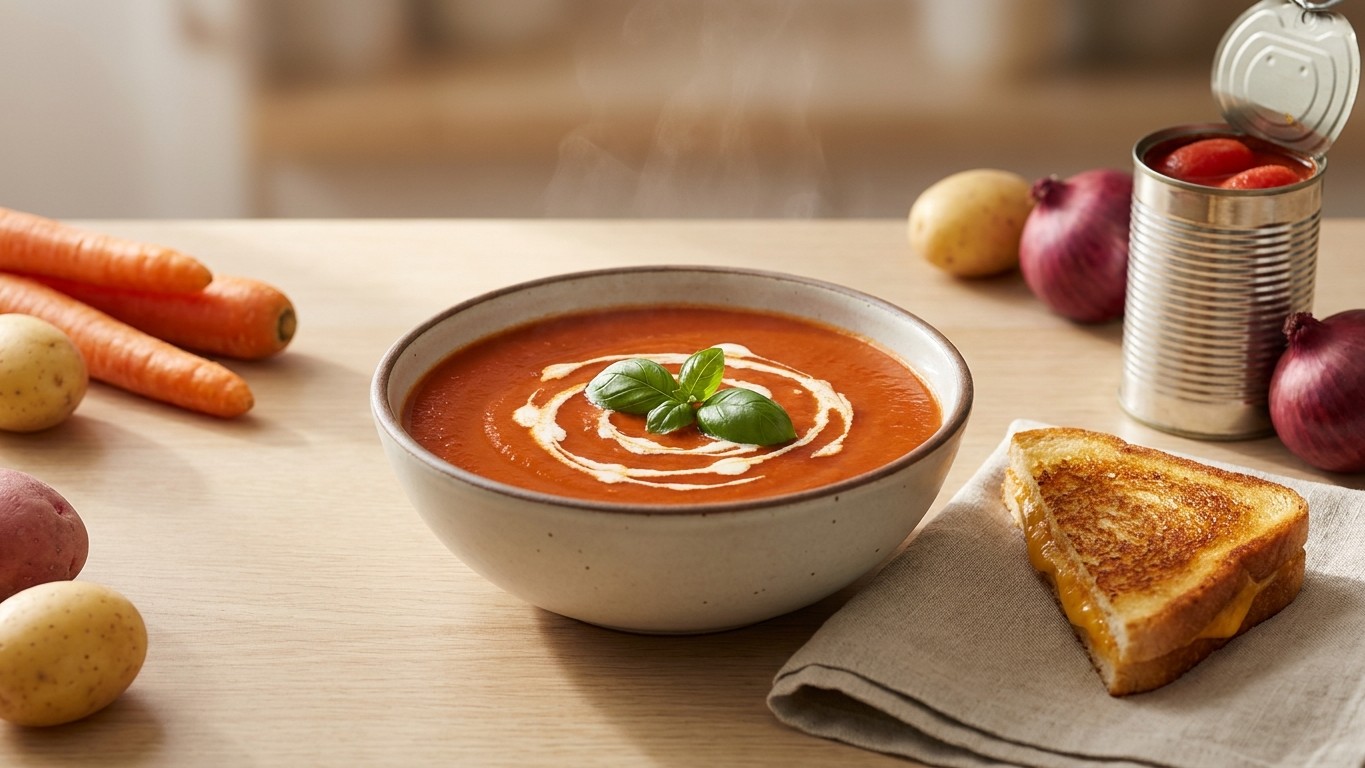
This is the tomato soup that makes you forget the canned stuff ever existed. Carrots and potatoes give it body and a natural sweetness, while a splash of milk at the end turns it silky and comforting. It makes a big batch, so you can stash some in the freezer for busy nights.
Why you'll love this
- Makes a big batch that freezes beautifully.
- Carrots and potatoes make it creamy without much cream.
- Pantry-friendly ingredients you likely already have.
- Naturally vegetarian and crowd-pleasing.
EveryDayMeal recipe
Creamy Tomato Soup
Prep
15m
Cook
35m
Total
50m
Serves
8
Level
Easy
Ingredients
- 3 tablespoons olive oil
- 2 onions, chopped
- 2 celery stalks, chopped
- 10 ounces (about 3 medium) carrots, peeled and chopped
- 1 pound potatoes, peeled and diced
- 4 bay leaves
- 5 tablespoons tomato paste
- 2 tablespoons granulated sugar
- 2 tablespoons white vinegar
- 3 (14.5-ounce) cans canned chopped tomatoes
- 2 cups tomato passata (strained tomatoes)
- 3 vegetable bouillon cubes
- 1 2/3 cups whole milk
- 4 cups boiling water
Equipment
- Large pot or Dutch oven
- Immersion blender or countertop blender
- Cutting board and knife
- Ladle
Instructions
- Add the olive oil, onions, celery, carrots, potatoes, and bay leaves to a large pot. Cook gently over medium heat, stirring now and then, until the onions turn soft and translucent, about 10 to 15 minutes. This slow start builds a sweet, mellow base instead of a sharp one.
- While the vegetables cook, bring a kettle or pot of water to a boil so it is ready to add.
- Stir in the tomato paste, sugar, and vinegar, then add the chopped tomatoes and passata. Crumble in the bouillon cubes and pour in 4 cups boiling water. Stir well to combine.
- Bring the soup to a simmer, then cover and cook for about 15 minutes, until the potatoes are completely tender when poked with a fork. Fish out and discard the bay leaves.
- Blend the soup until very smooth using an immersion blender, or work in batches with a countertop blender (leave the lid vented to let steam escape). Taste and season with salt and pepper, adding a pinch more sugar if the tomatoes taste too tangy.
- To serve, reheat gently and stir in the milk, keeping the heat low so it warms through without boiling (boiling can cause the milk to curdle). Ladle into bowls and serve hot.
Tips from the kitchen
- Blend longer than you think for that velvety, restaurant-smooth texture.
- If using a countertop blender, fill it only halfway and hold the lid down with a towel. Hot soup expands fast.
- Add the milk only when reheating the portion you are eating, so the base freezes and reheats cleanly.
Estimated nutrition per serving: 210 cal · 6g protein · 32g carbs · 7g fat
Make it your own
- Swap the milk for heavy cream for an extra-rich version.
- Stir in a pinch of red pepper flakes or smoked paprika for warmth.
- Add a handful of fresh basil before blending for a brighter flavor.
Storing & make-ahead
Cool completely, then refrigerate the blended base (before adding milk) for up to 2 days, or freeze for up to 3 months. Reheat gently and stir in the milk just before serving.
Good to know
- Can I use fresh tomatoes instead of canned?
- Yes, use about 3 pounds of ripe tomatoes, but canned give a more consistent, deep flavor year round.
- Why not let it boil after adding milk?
- Boiling can make the milk separate and look curdled. Keep it at a gentle simmer so it stays smooth.
- Can I make it dairy-free?
- Absolutely. Swap the whole milk for canned coconut milk or a plain unsweetened oat milk.
- What should I serve with it?
- Grilled cheese, crusty bread, or cheesy sausage rolls are all perfect for dunking.
Related recipes
Lunch
Vietnamese Chicken Salad with Rice Noodles

Lunch
Grilled Mac and Cheese Sandwich

Lunch
Lasagna Grilled Cheese Sandwiches
Love this? Get one every day.
Every meal, sorted. Free daily recipes in your inbox.