Dinner · Italian
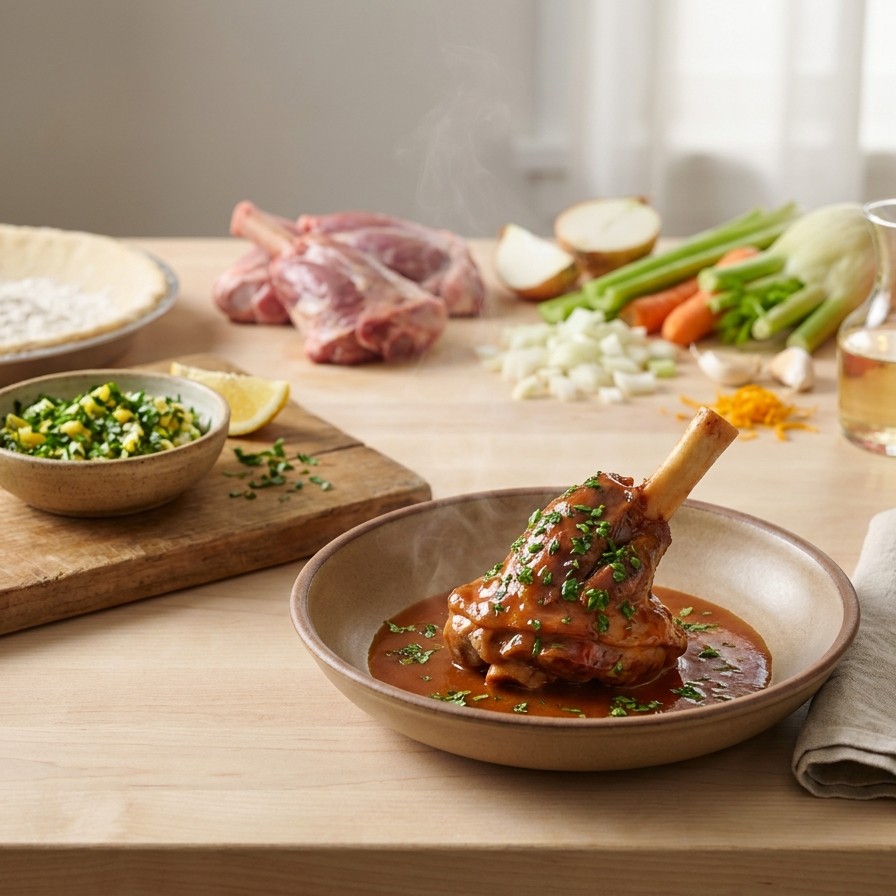
Osso Buco alla Milanese

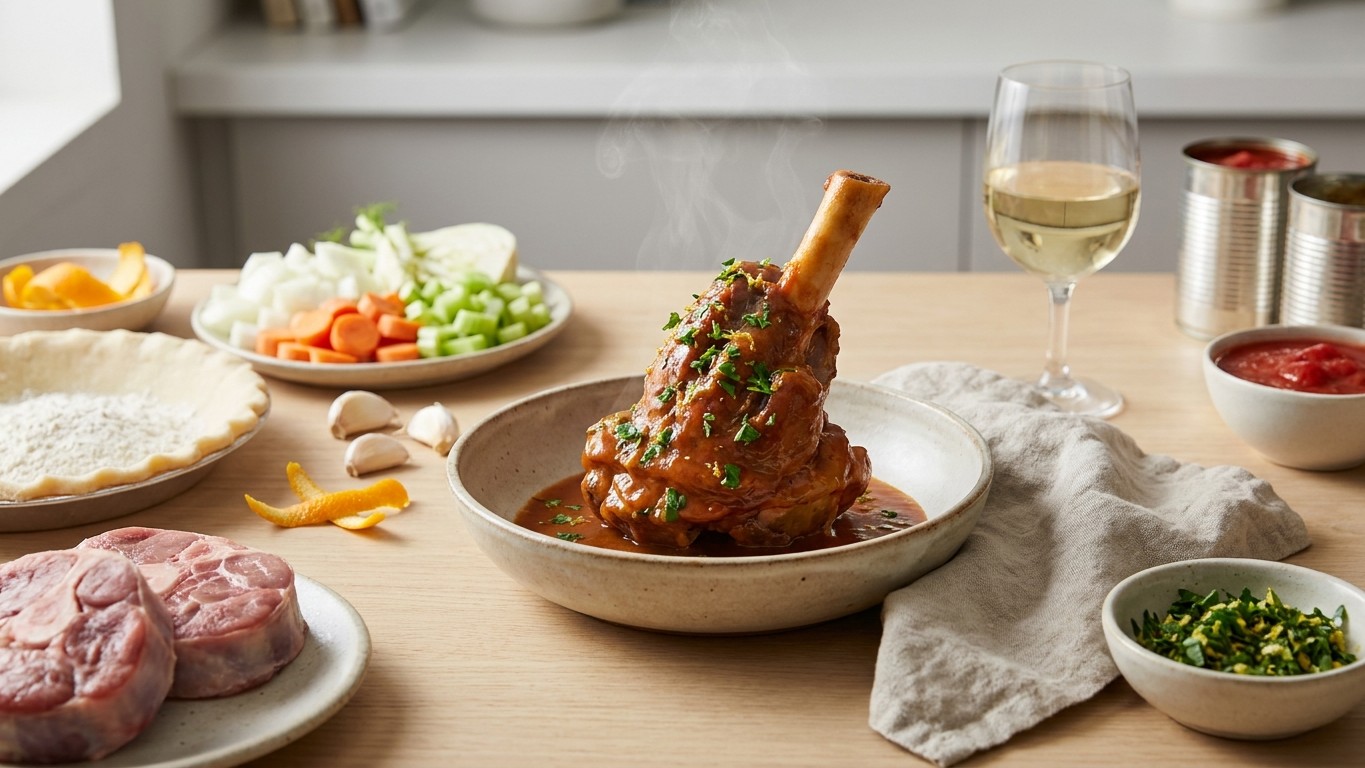
This classic Italian braise turns tough veal shanks into meltingly tender meat that pulls right off the bone. It takes a couple of hours in the oven, but almost all of that is hands-off time. A fresh gremolata of lemon, parsley, and garlic brightens every bite.
Why you'll love this
- Fall-off-the-bone tender veal from a mostly hands-off oven braise.
- The bright lemon-garlic gremolata cuts right through the rich sauce.
- A restaurant-worthy dish you can make ahead for guests.
- One pot does the browning, braising, and sauce.
EveryDayMeal recipe
Osso Buco alla Milanese
Prep
30m
Cook
150m
Total
180m
Serves
4
Level
Medium
Ingredients
- 4 meaty veal shanks
- 1/2 cup all-purpose flour
- 2 tablespoons olive oil
- 3 tablespoons butter
- 1 medium onion, chopped into 1/2-inch pieces
- 1 carrot, chopped into 1/2-inch pieces
- 1 stalk celery, chopped into 1/2-inch pieces
- 1 fennel bulb, chopped into 1/2-inch pieces
- 3 garlic cloves
- 2 strips orange zest
- 1 1/2 teaspoons dried marjoram
- 1 bay leaf
- 1 cup dry white wine
- 1/2 cup chicken stock
- 1 cup chopped tomatoes with juice
- 2 tablespoons fresh parsley, chopped
- 1 teaspoon garlic, minced
- 1 teaspoon lemon zest, grated
Equipment
- 6 to 7 quart Dutch oven with lid
- Tongs
- Shallow dish for dredging
- Parchment paper
- Slotted spatula
Instructions
- Heat your oven to 300 degrees F so it is fully preheated before the shanks go in for their long, gentle braise.
- Pour the flour into a shallow dish (a pie plate is perfect) and season the veal shanks all over with salt and pepper. Roll each shank in the flour, then pat and shake off the excess so you get a thin, even coat that browns cleanly rather than a gummy crust.
- Heat the olive oil and 1 tablespoon of the butter in a wide 6 to 7 quart Dutch oven over medium-high heat. When the butter has melted and the oil shimmers, add the shanks flat side down, working in batches if they crowd the pot. Brown well, turning once, about 5 minutes per side, until both flat faces are deeply caramelized for maximum flavor.
- Transfer the browned shanks to a platter. Pour off the fat and wipe the pot with a damp paper towel, taking care to leave the tasty browned bits stuck to the bottom.
- Melt the remaining 2 tablespoons butter in the pot over medium heat. When the foaming stops, add the onion, carrot, celery, and fennel, season with salt and pepper, and cook about 6 minutes until softened but not browned, so the vegetables taste sweet.
- Stir in the whole garlic cloves, orange zest, marjoram, and bay leaf and cook another minute or two until fragrant, which wakes up all the aromatics.
- Pour in the wine, raise the heat to high, and boil about 5 minutes, stirring now and then, until reduced by half so the raw alcohol edge cooks off.
- Add the stock and tomatoes with their juice and boil about 10 minutes, until the liquid reduces to roughly 1 cup of concentrated, flavorful base.
- Nestle the shanks back in bone side up and pour over any juices from the platter. Lay a sheet of parchment right on top of the meat, letting the edges hang over the pot by about an inch, then cover tightly with the lid.
- Slide the pot into the lower part of the oven. Check after 15 minutes: if it is bubbling hard, drop the oven by 10 to 15 degrees so it stays at a gentle simmer. Braise about 2 hours total, turning the shanks and spooning juices over them after the first 40 minutes, until the meat is fork-tender and pulling from the bone.
- While the shanks braise, stir together the minced garlic, parsley, and lemon zest in a small bowl for the gremolata. Cover and keep in a cool spot until you need it.
- When the veal is falling-apart tender, remove the lid, sprinkle over half the gremolata, and return it uncovered to the oven for 15 minutes to caramelize the tops a bit.
- Carefully lift the shanks out with a slotted spatula, doing your best to keep them intact (they are very tender, so a few may break, which is totally fine). Arrange them on a platter without stacking and tent with foil to keep warm.
- Set the pot on the stove and skim off any fat floating on top. Taste the sauce: if it seems weak, boil it 5 to 10 minutes over high heat to concentrate the flavor. Adjust the salt and pepper, and stir in a teaspoon or two of the remaining gremolata if you want more brightness.
- Spoon the sauce over the shanks and finish with the last of the gremolata. Serve one shank per person, or pull the meat apart to stretch it further for smaller appetites.
Tips from the kitchen
- Pat the shanks dry and coat them thinly in flour for the best browning; a wet or heavily floured shank steams instead of caramelizes.
- Tie a loop of kitchen twine around each shank to help it hold its shape during the long braise.
- Make the gremolata just before serving so the lemon and parsley stay bright and fresh.
Estimated nutrition per serving: 520 cal · 48g protein · 18g carbs · 26g fat
Make it your own
- Swap veal shanks for beef shanks or lamb shanks; just extend the braise until fully tender.
- Serve over saffron risotto alla Milanese, creamy polenta, or mashed potatoes to soak up the sauce.
- No fennel? Use an extra rib of celery and a pinch of fennel seed instead.
Storing & make-ahead
Cool completely, then refrigerate the shanks in their sauce for up to 3 days. The flavor actually improves overnight. Reheat gently, covered, in a 325 degree F oven or on the stovetop until hot. Freeze for up to 3 months and thaw in the fridge before reheating. Make the gremolata fresh each time.
Good to know
- What can I serve with osso buco?
- The classic pairing is saffron risotto alla Milanese, but creamy polenta, mashed potatoes, or crusty bread all work great for catching the sauce.
- Can I make this ahead?
- Yes, and it is even better the next day. Braise the shanks fully, cool, and refrigerate in the sauce, then reheat gently. Add the fresh gremolata just before serving.
- Do I have to use veal?
- No. Beef or lamb shanks make excellent substitutes. They may need a little more braising time, so cook until the meat pulls easily from the bone.
- What is gremolata and why does it matter?
- It is a simple raw mix of lemon zest, parsley, and garlic. Sprinkled on at the end, it adds a fresh, zippy contrast to the rich braised meat.
Related recipes
Dinner
Traditional Croatian Goulash
Dinner
Salmon and Prawn Risotto with Asparagus
Dinner
Quinoa and Black Bean Stuffed Bell Peppers
Love this? Get one every day.
Every meal, sorted. Free daily recipes in your inbox.